 EN

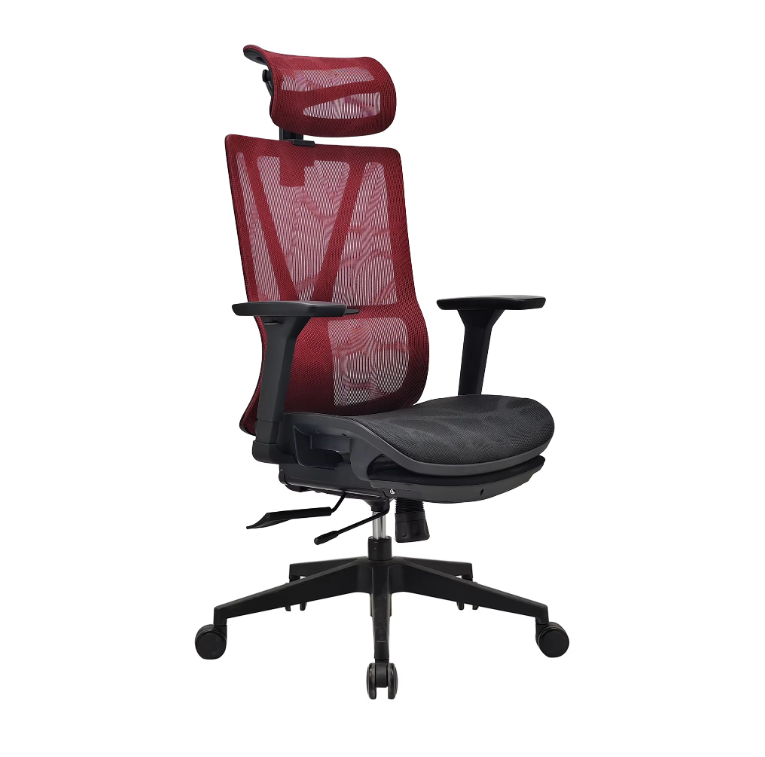
Customization starts with seat dimensions, not logo placement
Corporate buyers often ask for custom sillas de oficina by starting with color and logo placement. Those are visible choices, yet they rarely decide whether a seating program works. The first conversation should be about seat height range, seat depth range, and back height. A fixed deep seat can fit tall users and press behind the knee for shorter staff. A seat slide costs more per unit, but it often covers more body types than stocking two chair sizes. EN 1335-1 gives dimensional guidance for office work chairs, including seat height and depth, and ISO 9241-5 frames adjustability as part of workstation posture. Neither standard certifies comfort, but both push the spec toward ranges instead of one compromise size. A corporate program that starts with dimensions avoids the common trap of buying a good-looking chair that only suits the average user.
Build a tiered seating plan instead of one chair for everyone
A single chair platform for an entire headquarters is easy to order and hard to fit. Most corporate floors have at least three seating zones: general workstations, focus or phone rooms, and executive or meeting areas. A tiered plan lets the general floor use a cost-controlled mesh chair with height adjustment and a tilt lock, while focus rooms get a deeper recline or a headrest, and executive rooms use a leather platform with a different mechanism. The tiers should share serviceable parts where possible, such as casters and gas lift classes, to keep spare-part planning simple. Too many platforms create a parts catalog that facilities cannot manage. Too few platforms force one chair to cover every body and every task. The useful target is usually two or three platforms, not eight.
Fabric and foam choices decide comfort and maintenance
Custom fabric is not only a color decision. Mesh tension, foam density, and seam construction affect how a chair feels after a year. A 45 kg/m3 molded foam seat usually holds shape better than a thick low-density block that bottoms out. Mesh backs can feel cool in warm rooms, yet drafty near air handlers. PU leather is easier to wipe down, but it can feel warm during long meetings. Corporate buyers should match materials to the room, not to a mood board. Cleaning routines matter too. Folded seams and textured fabric collect dust, and some cleaners damage PU surfaces. A practical spec names the foam density range, the mesh tension test method, and the approved cleaning product. Those details look boring on a purchase order, and they are exactly what keeps a custom seating program from turning into a maintenance list.
Mechanism and gas lift choices need a written configuration
The mechanism is where customization can quietly go wrong. A synchro-tilt mechanism moves the back and seat together, which usually keeps the seat edge from pushing into the thighs as the back opens. A back-only recline is cheaper, but the lumbar pad can drift away at a deep angle. Gas lifts should carry a supplier class and a test report, not a vague heavy duty label. ANSI/BIFMA X5.1 covers cyclic load and stability tests for office chairs, and a report tied to the purchased variant is more useful than a generic certificate. The written configuration should list the mechanism model, lock positions, gas lift class, and arm adjustment range. Without that record, a second order can arrive with a different mechanism that looks the same and behaves differently.
| Zone | Typical platform | Seat adjustment | Foam target | Mechanism | Main risk |
|---|---|---|---|---|---|
| General workstations | Mesh task chair | Height and seat slide | 45 kg/m3 | Synchro-tilt with lock | Mesh tension drift |
| Focus or phone rooms | Mesh chair with headrest | Height, seat slide, headrest | 45 kg/m3 | Deeper recline with lock | Headrest fit across heights |
| Executive or meeting areas | PU leather manager chair | Height and knee-tilt | 50 kg/m3 | Knee-tilt | Heat buildup and seam wear |
| Shared support seating | Training chair | Height only | 40 kg/m3 | Flip seat or nesting | Frame alignment |
A headquarters pilot showed where customization paid off
In a 320-seat technology headquarters fit-out in southern China, the facilities team ordered 30 sample chairs across three tiers. The general floor sample used a mesh back and a seat slide. The focus room sample added a headrest and a deeper recline. The executive sample used PU leather and a knee-tilt mechanism. After six weeks, the team found that the general floor chair fit most users, but the headrest on the focus chair did not suit shorter staff. Two headrest heights were ordered for the second batch. The executive chair was comfortable, yet the lighter color showed ink marks near the armrests, so a darker PU was chosen. The final order kept three platforms and shared casters across all of them. The pilot did not prove that customization always pays. It showed that small adjustments, tested with real users, prevent expensive rework later.
Keep the custom program repeatable after the first order
Customization that cannot be repeated is a one-time purchase, not a program. The buyer should keep an approved sample, a written configuration, and a photo record of the packaging. Spare parts should be planned by platform, not by room. A second order six months later can fail if the foam density drifts or the mesh supplier changes. The specification should include measurable checkpoints: foam density range, frame wall thickness, gas lift class, caster cycle test, and carton drop height. A supplier that can hold those checkpoints across repeat orders is more valuable than one with a wider color card. For corporate buyers comparing sillas de oficina at scale, Boke, the Foshan-based chair factory, is worth a look. Its line covers mesh, leather, and training chairs, with in-house checks on frames, foam, and incoming fabric, plus export packing and spare-part planning that multi-platform office programs usually need.
Table of Contents
- Customization starts with seat dimensions, not logo placement
- Build a tiered seating plan instead of one chair for everyone
- Fabric and foam choices decide comfort and maintenance
- Mechanism and gas lift choices need a written configuration
- A headquarters pilot showed where customization paid off
- Keep the custom program repeatable after the first order