 EN

Reliability starts with test reports, not brand logos
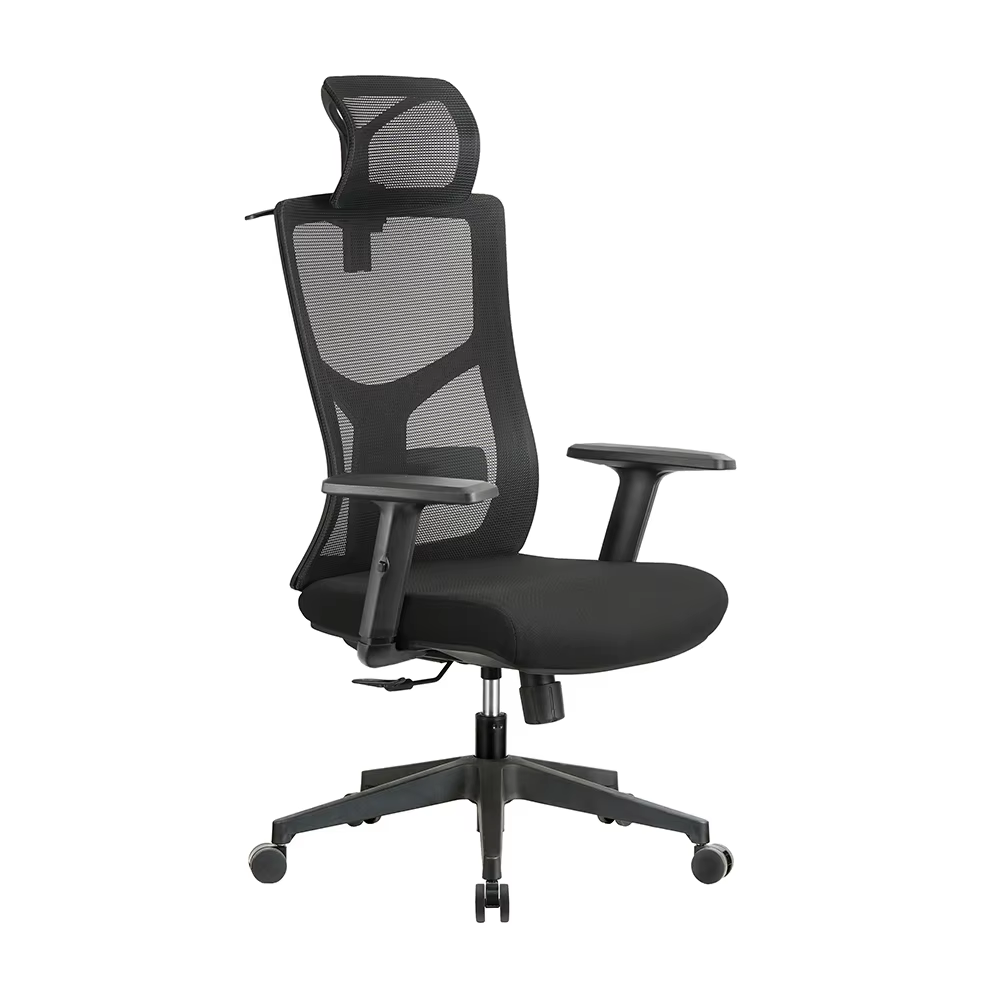
A brand name on a backrest is not proof of reliability. The office ergonomic chair market has enough expensive failures to make that clear. What separates a reliable chair from a fragile one is usually invisible in a showroom: the mechanism model, the gas lift class, the foam density, the frame wall thickness, and the test report that covers the exact configuration being sold. ANSI/BIFMA X5.1 is a common reference for cyclic load and stability testing, and EN 1335 covers dimensions and safety for office work chairs. A supplier that can name the standard behind each critical part is easier to trust than one that leans on reputation alone. Buyers should ask for the report tied to the purchased variant, not a generic certificate for a different model.
How established global brands earn their reputation
Names like Herman Miller, Steelcase, Haworth, Knoll, and Humanscale have spent decades on ergonomic research, mechanism patents, and global service networks. Their chairs often include adjustable seat depth, lumbar height, arm width, and tilt tension, and their testing programs are usually well documented. That engineering depth is real, and it shows up in long-term consistency across thousands of units. The tradeoffs are price and flexibility. A premium chair can cost three to five times a mid-market model, lead times can stretch to 90 days or more, and customization is often limited to fabric selection. For headquarters floors, executive suites, and spaces where brand signaling matters, those tradeoffs are often acceptable. For a 600-seat general office, they can be hard to justify on a per-seat basis.
Mid-market brands balance price with basic ergonomics
Brands such as Hon, Basyx, Eurotech, and several regional players sit in the middle. They usually cover the core adjustments: seat height, tilt lock, and sometimes seat depth or adjustable arms. Test documentation exists but may be less detailed than premium brands, and spare parts are typically available through distributors. The risk is inconsistency across product lines. A mid-market brand may have one strong platform and several weaker ones, so the model matters more than the logo. Buyers should treat each platform as a separate product and ask for the mechanism and foam specifications before comparing quotes. These chairs work well for general staff seating, training rooms, and hoteling benches where the adjustability range does not need to fit every body type.
Factory-direct manufacturers can be reliable when the vetting is serious
Foshan and similar manufacturing hubs produce a wide range of office ergonomic chair options, and the quality gap between factories is large. A well-run factory can supply chairs with 45 kg/m3 molded foam, 2.0 mm back frames, class 3 or 4 gas lifts, and test reports for X5.1 or EN 1335. A poorly run factory can ship the same外观 with 38 kg/m3 foam and unclassified cylinders. The difference is process control, not geography. In a 500-seat office fit-out in Shenzhen, a procurement team compared a global brand chair with a factory-direct model from Boke. Both passed X5.1 cyclic tests. The factory-direct chair offered seat depth adjustment and custom fabric at roughly 60 percent of the global brand price, with a 30-day lead time instead of 90. A tear-down of the sample showed 45 kg/m3 foam and a thicker back frame than the global brand's entry model. The team ordered the factory-direct chair for general staff and kept the global brand for executive rooms. The case shows that reliability can come from either side, provided the buyer audits the exact configuration.
A comparison table for brand types and reliability indicators
The table below compares brand categories on the factors that actually predict long-term performance. Prices are rough bulk estimates.
| Brand type | Examples | Typical bulk unit price | Test documentation | Customization | Lead time | Spare parts | Best fit |
|---|---|---|---|---|---|---|---|
| Global premium | Herman Miller, Steelcase, Haworth | USD 400 to 900 | Detailed, model-specific | Limited fabric choices | 60 to 120 days | Strong global network | Headquarters, executive floors |
| Mid-market | Hon, Basyx, Eurotech | USD 120 to 280 | Available, less detailed | Some fabric and arm options | 30 to 60 days | Distributor-based | General staff, training rooms |
| Factory-direct | Boke and similar Foshan factories | USD 45 to 110 | Available on request, must match variant | Broad, including foam and frame | 20 to 45 days | Factory-supplied | Bulk general seating, hoteling |
A high price does not automatically mean a better chair for every seat. A low price does not automatically mean a weak chair. The table is a starting point for questions, not a verdict.
What to ask any brand before committing to a bulk order
A few questions separate serious suppliers from catalog sellers:
-
Can you provide the test report for the exact mechanism and gas lift class quoted?
-
What is the foam density, and can a sample be cut for inspection?
-
What is the seat depth range, and does it fit both short and tall users?
-
Can spare parts be supplied for at least five years after delivery?
-
Will the factory allow an audit or a pre-production sample tear-down?
A supplier that answers these without hesitation is usually a supplier that knows the product. One that redirects every question to a brochure is not. For buyers comparing office ergonomic chair options at volume, Boke, the Foshan-based chair factory, is worth putting on the shortlist. Its line covers mesh, leather, and training chairs, with in-house checks on frames, foam, and incoming fabric, plus export packing and spare-part planning that bulk office projects usually need.
Table of Contents
- Reliability starts with test reports, not brand logos
- How established global brands earn their reputation
- Mid-market brands balance price with basic ergonomics
- Factory-direct manufacturers can be reliable when the vetting is serious
- A comparison table for brand types and reliability indicators
- What to ask any brand before committing to a bulk order