 EN

Start with the seat pan and the adjustment range
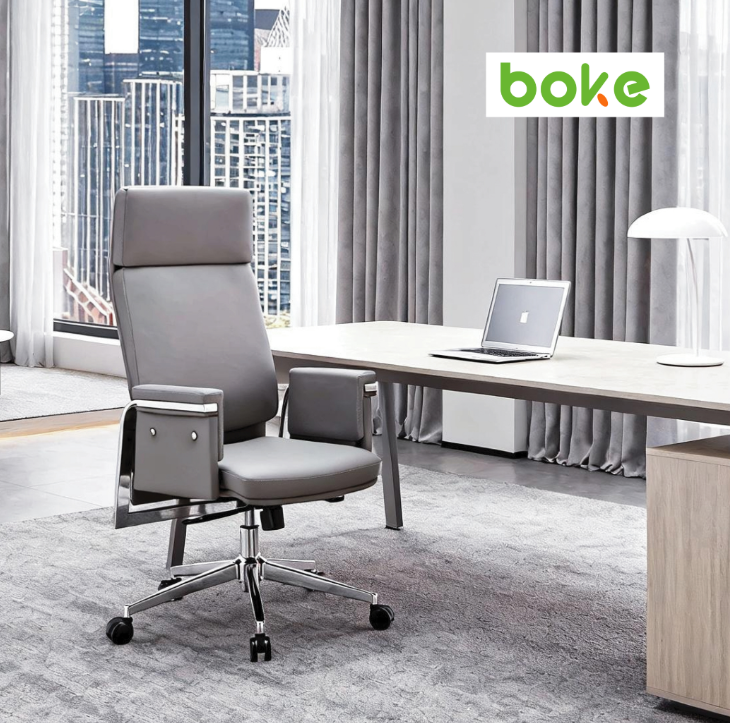
A quality check on an office ergonomic chair should begin where the body meets the product. The seat pan is not just foam and fabric. It is the platform that decides whether thigh support is even. Press the front edge with a flat hand. A hard edge that cuts into the hand will likely press behind the knee after an hour. Check seat height range and seat depth range, not just the midpoint. A fixed deep seat can fit tall users and punish shorter ones. EN 1335-1 sets dimensional guidance for office work chairs, including seat height and depth, which gives a useful checklist for comparing samples. A seat slide adds cost, yet it often covers more users than stocking two chair sizes. The tradeoff is more mechanism parts to inspect and service. Buyers should also sit for at least ten minutes, because a quick sit rarely reveals pressure points.
Work the mechanism through its full range
Tilt the back through every lock position and listen for grinding or a loose knock. A mechanism that feels smooth in the showroom can develop play after a few hundred cycles. Synchro-tilt designs move the back and seat together, which usually keeps the seat edge from pushing into the thighs as the back opens. A back-only recline is simpler and cheaper, but the lumbar pad can drift away from the lower back at a deep angle. Ask for the mechanism model and the test report that covers that exact variant. ANSI/BIFMA X5.1 includes cyclic load tests for the seat, back, and base, and a report tied to the purchased configuration is more useful than a generic certificate. The lock release should work with one hand and without a hard jerk.
Inspect the frame, base, and casters for hidden shortcuts
Flip the chair over. Look at the wall thickness of the back frame, the weld quality on the base, and the fit between the gas lift and the hub. A thin frame can feel fine when new, then flex and creak under daily load. Gas lifts should carry a supplier class and a test report, not a vague heavy duty label. Casters deserve a spin and a push across carpet and hard floor. Cheap casters roll well on tile and drag on carpet, which shows up as user complaints long before the chair breaks. These parts are rarely visible in a catalog photo, and they are where a low quote usually hides its savings. A quick check of screw torque and thread engagement also catches assembly shortcuts.
Check foam and upholstery with hands and a timer
Foam density matters more than thickness. Press the seat with a palm and hold for a few seconds. A 45 kg/m3 molded foam seat usually recovers faster than a thick low-density block that bottoms out. Mesh backs need a tension check across the center and edges. Loose mesh sags and changes the lumbar contact point. PU leather should be checked at seams and corners, where splitting starts. A simple rub with a white cloth can reveal dye transfer. Material choice also has limits. Mesh can feel drafty near air handlers, and PU can feel warm during a long meeting. Neither material is universally right, so match the sample to the room and the cleaning routine.
Use an inspection table to compare samples on equal terms
The table below turns the checks into a side-by-side comparison. Scores are examples, not industry ratings. The goal is to force the same questions across every sample.
| Check | What to test | Weak sign | Strong sign | Sample A score | Sample B score |
|---|---|---|---|---|---|
| Seat depth range | Short and tall users | Fixed deep pan | Slide or two sizes | 2 | 4 |
| Mechanism play | 200 tilt cycles | Knock at pivot | Smooth lock positions | 2 | 4 |
| Gas lift | Class and report | No class label | Report matches unit | 1 | 4 |
| Foam recovery | Palm press, 10 seconds | Slow spring back | Quick recovery | 3 | 4 |
| Mesh tension | Center and edges | Sag or waves | Even tension | 2 | 4 |
| Caster roll | Carpet and tile | Drag on carpet | Consistent roll | 3 | 4 |
A table like this does not replace a trial. It does keep a meeting from turning into a debate about looks. It also gives the supplier a clear list of what will be checked on delivery.
Run a sample trial and learn from a 240-chair audit
A shared services office in southern China ordered 240 office ergonomic chair units after a short sample review. The first delivery passed a visual check. A follow-up audit of 30 cartons found a mismatch. The gas lift class on the label did not match the test report, and one batch had a seat foam that felt softer than the approved sample. The supplier had substituted a lower-density foam without notice. The order was held, the batch was retested, and the final shipment used the approved foam and cylinder. The case is not unusual. Visual checks catch obvious defects, yet they miss hidden substitutions. A sample trial should include a tear-down, a cycle test on the mechanism, and a written record of the approved configuration. Boke, the Foshan-based chair factory, builds mesh, leather, and training chairs with in-house checks on frames, foam, and incoming fabric, plus export packing and spare-part planning that bulk office projects usually need.
Table of Contents
- Start with the seat pan and the adjustment range
- Work the mechanism through its full range
- Inspect the frame, base, and casters for hidden shortcuts
- Check foam and upholstery with hands and a timer
- Use an inspection table to compare samples on equal terms
- Run a sample trial and learn from a 240-chair audit