 EN

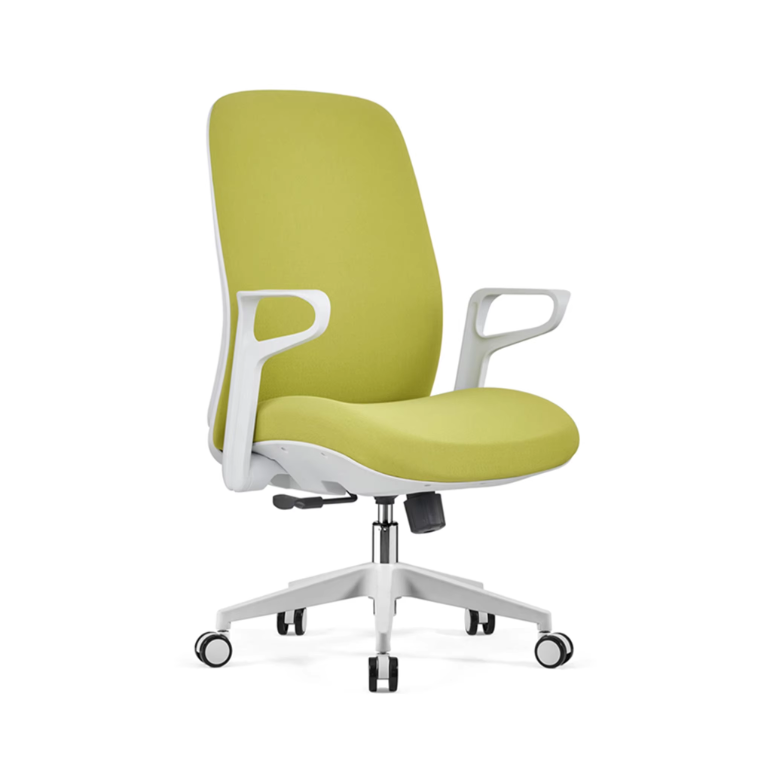
The word ergonomic means little until standards are named
Plenty of catalogs describe an office ergonomic chair as if the label alone settles the question. It does not. Ergonomics is a design intent, and intent needs measurable checkpoints. The useful conversation starts when a supplier can name the standards behind the seat dimensions, the recline mechanism, the gas lift, and the durability tests. Those standards do not guarantee that every user will feel comfortable. They do give buyers a shared language for comparing chairs that look similar in photos but behave very differently after a year of daily use. A chair can be labeled ergonomic and still fail on seat depth range, lumbar contact, or mechanism play. The standards are the part that keeps the claim honest.
Dimensions come first because bodies vary more than catalogs admit
The first design layer is anthropometry, and it is where many cheap chairs cut corners. Seat height range needs to fit a broad spread of users, not just the average. Seat depth matters just as much. A fixed deep seat can press behind the knee for shorter users, while a shallow seat leaves taller users without thigh support. EN 1335-1 sets dimensional requirements for office work chairs, including seat height, seat depth, and backrest dimensions. ISO 9241-5 takes a broader view of workstation layout and posture. Neither standard forces one perfect shape, but both push designers toward adjustable ranges rather than a single compromise size. A seat slide is not a luxury feature in that context. It is a practical way to cover more users without stocking multiple chair sizes.
Durability tests catch the parts that fail long before the foam does
Most office chair failures show up in the mechanism, the gas lift, the base, or the casters, not in the fabric. ANSI/BIFMA X5.1 is the reference many North American buyers ask for, and it covers cyclic load tests for the seat, back, and base, plus stability and caster durability. A chair that passes X5.1 has been pushed through repeated loading that resembles years of office use. That does not mean it will never fail. It means the core structure has been tested against a known protocol. Gas lifts should be classified by the cylinder supplier, and buyers should ask for the class and test report rather than a vague heavy duty claim. Foam density also belongs in the specification. A 45 kg/m3 molded foam seat usually holds shape better than a thick low-density block that flattens after a year.
A comparison of the standards that shape an office ergonomic chair
The table below groups the main standards by what they actually check. It is not a ranking. A chair can meet one standard and still fall short on another, which is why good specifications cite more than one.
| Standard or reference | Main focus | What it helps buyers check | Typical limit |
|---|---|---|---|
| EN 1335-1 | Dimensions | Seat height, seat depth, backrest size | Does not measure comfort directly |
| EN 1335-2 | Safety | Strength, stability, mechanism safety | Does not cover long-term wear |
| EN 1335-3 | Test methods | How dimensional and safety checks are run | Results depend on lab discipline |
| ANSI/BIFMA X5.1 | Durability and stability | Cyclic load, base strength, caster wear | Does not set ergonomic dimensions |
| ISO 9241-5 | Workstation posture | Layout, adjustability, posture support | Broad guidance, not a chair test |
| BIFMA G1 | Ergonomics guidance | Adjustment ranges for varied users | Voluntary guidance, not certification |
What a 300-seat sample trial showed about paperwork
In a shared services fit-out in southern China, the procurement team shortlisted three office ergonomic chair models that all claimed EN 1335 and X5.1 compliance. The paperwork looked clean. The team then ordered 30 sample chairs and ran a six-week trial across two floors. Two issues surfaced. The first was seat depth. The fixed seat worked for taller users but pressed behind the knee for several shorter staff members. The second was mechanism play. After roughly 400 tilt cycles on a test rig, one model developed a noticeable wobble at the pivot. The supplier had a test report, but the report covered a different mechanism variant. The final order went to a model with a seat slide and a mechanism that matched the tested sample. The lesson was simple: a certificate is only useful when it matches the exact configuration being purchased.
Where standards stop and judgment starts
Standards are necessary, not sufficient. They cannot tell a buyer whether a headrest will fit a five-foot-two user or whether a mesh back will feel drafty near an air handler. They also cannot settle cleaning routines or aisle clearance. A few practical checks belong alongside the standard citations:
-
Ask for the test report for the exact mechanism and gas lift class being quoted.
-
Confirm seat height and seat depth ranges, not just the midpoint.
-
Test headrest and lumbar adjustment with different body heights.
-
Check the chair in its reclined position for rear clearance.
-
Match fabric or mesh to the room's air conditioning and cleaning products.
A supplier that can walk through these points without hedging is usually a supplier that knows the product. One that answers every question with a brochure is not.
For buyers comparing office ergonomic chair options at volume, Boke, the Foshan-based chair factory, is worth a look. Its line covers mesh, leather, and training chairs, with in-house checks on frames, foam, and incoming fabric, plus export packing and spare-part planning that contract furniture projects usually need.
Table of Contents
- The word ergonomic means little until standards are named
- Dimensions come first because bodies vary more than catalogs admit
- Durability tests catch the parts that fail long before the foam does
- A comparison of the standards that shape an office ergonomic chair
- What a 300-seat sample trial showed about paperwork
- Where standards stop and judgment starts