 EN
EN

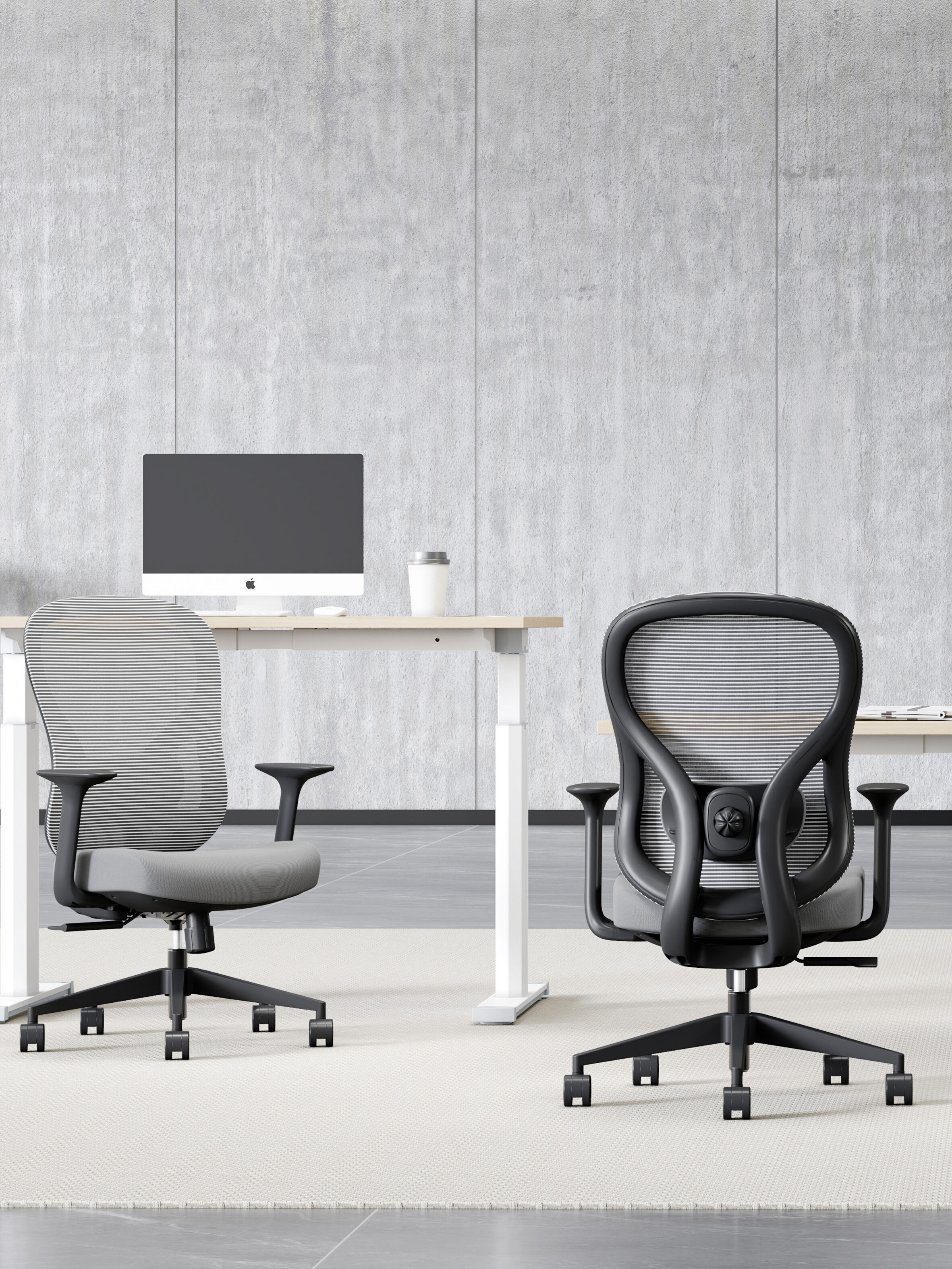
Ergonomic Necessity: How Adjustable Office Chairs Match Human Diversity
The Sedentary Work Crisis and Rising Musculoskeletal Risk
Sedentary work patterns have intensified musculoskeletal disorder (MSD) risks, with employees now averaging 7.5 seated hours daily. Research indicates 54% of desk workers experience chronic lower back pain annually, while posture-related injuries cost employers $740k per 1,000 employees (Ponemon Institute, 2023). Non-adjustable chairs directly contribute to this crisis by forcing diverse body types into unnatural positions: petite users endure pressure points from oversized seats, and taller individuals develop spinal strain from inadequate lumbar alignment. This anatomical mismatch explains why standardized seating fails 84% of employees (CDC, 2024), accelerating fatigue and repetitive stress injuries across weight and height variations.
Core Adjustability Features That Enable True Personalization
Adjustable office chairs resolve anatomical mismatches through five critical customization points:
- Seat depth adjustments eliminate knee pressure by accommodating varying thigh lengths
- Dynamic lumbar systems vertically reposition to support individual spinal curves
- Multidirectional armrests align shoulder-to-desk height ratios
- Tilt tension controls adapt recline resistance to individual body weight
- Seat height mechanisms optimize hip-to-knee angles for circulation
These features function synergistically to prevent pressure concentration. For example, proper seat depth adjustment distributes ~60% of body weight to the thighs instead of the sacrum, reducing disc compression (Ergonomics Society, 2023). Simultaneous armrest and lumbar micro-adjustments enable neutral wrist-to-spine alignment during extended tasks—decreasing cumulative trauma risk by 41%. This personalized biomechanical support transforms chairs from passive furniture into adaptable tools aligned with human physiology.
Proven Health Benefits of Consistent Adjustable Office Chair Use
Reduction in Lower Back Pain and Postural Fatigue
Persistent lower back pain affects 80% of desk workers annually—primarily due to prolonged static postures. Adjustable chairs combat this through customizable lumbar support that maintains the spine’s natural curvature. By enabling precise alignment of seat depth, backrest angle, and armrest height, they distribute weight evenly across the pelvis, reducing disc pressure by up to 40% (Ergonomics Society, 2023). Dynamic recline mechanisms further prevent muscle stiffness by facilitating subtle position shifts every 20–30 minutes. Employees report 34% less pain intensity after three months of consistent use—translating to fewer discomfort-driven productivity interruptions.
Biomechanical Support for Spinal Neutral Alignment and Micro-Movement
Optimal spinal health requires both stability and subtle motion. Adjustable chairs promote neutral alignment through synchronized tilt mechanisms that keep hips, pelvis, and spine in harmonious positioning. This enables micro-movements—small weight shifts and pelvic rotations—that stimulate nutrient-rich blood flow to spinal discs. Research shows such movement increases disc hydration by 26% compared to rigid sitting, slowing degenerative wear (Journal of Occupational Rehabilitation, 2022). Adjustable headrests stabilize cervical vertebrae during reclining, preventing neck strain. The result is 31% less postural fatigue during extended tasks, transforming static sitting into an active, joint-protective process.
Enhanced Focus and Productivity Through Adaptive Comfort
Physical comfort directly fuels cognitive performance in workplace settings—and adjustable office chairs serve as critical tools for maintaining sustained concentration. By enabling personalized support through features like lumbar adjustments and seat depth customization, these chairs reduce musculoskeletal distractions that fragment attention. Occupational ergonomics research consistently shows employees free from discomfort maintain focus up to 35% longer and demonstrate measurable productivity gains. The ability to micro-adjust seating throughout the day supports natural spinal movement and circulation, effectively combating mental fatigue and the “afternoon slump” common at static workstations. This adaptive comfort translates into fewer task interruptions, reduced error rates, and enhanced creative problem-solving—channeling mental energy toward execution rather than bodily strain management.
Strategic ROI: Cost Savings from Reduced Absenteeism and Healthcare Costs
Investing in adjustable office chairs delivers quantifiable financial returns by reducing MSD-related absenteeism and healthcare expenses. Workstation ergonomics interventions—including ergonomic seating—reduce MSD incidence by up to 61% (Journal of Occupational Rehabilitation, 2022), directly lowering sick leave costs.
Quantifying MSD-Related Absenteeism Reduction
MSDs account for nearly 34% of all work absenteeism (U.S. Bureau of Labor Statistics, 2023), costing employers $740k annually per 1,000 employees (Ponemon Institute, 2023). Facilities implementing ergonomic seating report:
| Cost Factor | Conventional Seating | With Adjustable Chairs |
|---|---|---|
| Avg. Sick Days/Year | 7.2 days | 4.1 days |
| Productivity Loss | 18% | 9% |
| MSD Treatment Costs | $840/employee | $310/employee |
This 43% decline in absenteeism stems from proper lumbar support and seat depth adjustability preventing chronic strain.
Calculating Long-Term ROI per Employee
The upfront cost of premium ergonomic seating ($600–$900) yields a median five-year ROI of $3,200 per employee through:
- $1,380 saved in absenteeism expenses
- $1,620 reduction in physical therapy and workers’ compensation claims
- $200 retained productivity value
Organizations realize full ROI within 14 months, with ongoing annual savings averaging 6.2× the chair’s initial investment (Ergonomics Analysis Group, 2023). Adjustable office chairs thus shift from furniture expenditures to strategic assets—fortifying both employee wellbeing and organizational fiscal resilience.
FAQ
Why are adjustable office chairs important?
Adjustable office chairs are important because they cater to diverse body types, promote proper posture, reduce musculoskeletal strain, and support spinal health, enhancing overall workplace comfort and productivity.
What are the key features of an adjustable office chair?
Key features include seat depth adjustment, dynamic lumbar support, multidirectional armrests, tilt tension controls, and seat height mechanisms, which collectively enable personalized comfort and ergonomic benefits.
How do adjustable office chairs improve health?
They help prevent musculoskeletal disorders and lower back pain by maintaining spinal alignment, enhancing micro-movements, and distributing body weight evenly to reduce strain and fatigue.
What are the financial benefits of investing in adjustable office chairs?
They provide a significant return on investment by reducing absenteeism, healthcare costs, and productivity losses due to musculoskeletal disorders, leading to long-term financial savings for organizations.