 EN

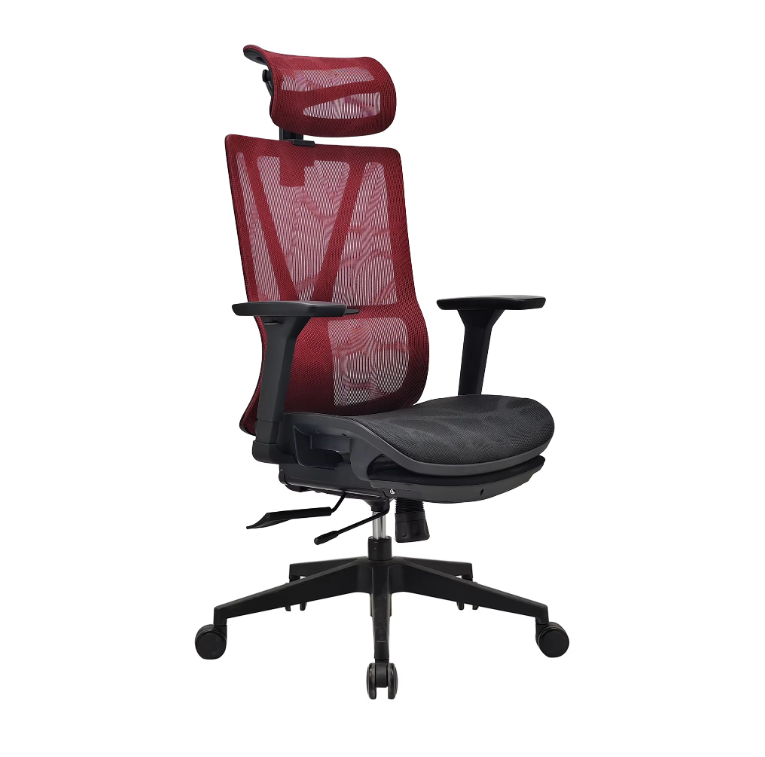
Cheap seats rarely stay cheap through a 300-chair rollout
Bulk buyers asking which sillas de oficina are cost-effective often start with a spreadsheet sorted by unit price. That is a reasonable first move, but it is a poor final one. A task chair is a mechanical product that gets abused eight hours a day, five days a week. The purchase price is only one line in the real cost stack. Freight, assembly, replacement parts, and the labor needed to swap failed units all show up later. A chair that saves $18 at the purchase order stage can lose that advantage after a handful of cylinder failures and a second freight shipment. Cost-effective seating, in bulk terms, means predictable performance across hundreds of identical units, not a hero sample that feels fine for ten minutes.
The parts that decide bulk value sit under the seat
The seat and back get the attention in showrooms. The money and risk sit in the mechanism, gas lift, base, casters, and foam density. A simple tilt mechanism with a tilt lock is cheaper and easier to service than a multi-function mechanism with seat-slide and synchro-tilt. For general office use, the simpler design often wins on total cost, provided the mechanism has a stable pivot and low play. Gas lifts should be classified by the supplier, and buyers should ask for the cylinder class and test report rather than a vague "heavy duty" claim. Foam density matters more than thickness. A 45 kg/m3 molded foam seat usually holds shape better than a thick low-density block that bottoms out after a year. Mesh quality is another hidden variable. Cheap mesh can stretch and sag; a better weave with controlled tension keeps the back support consistent.
A practical cost band comparison for common sillas de oficina types
The table below uses estimated export price bands for bulk orders, not retail prices. Actual quotes move with foam density, frame wall thickness, packaging, and port. The point is to compare risk, not to chase the lowest number.
| Chair type | Typical bulk unit price band | Mechanism and adjustment | Best fit | Main cost risk |
|---|---|---|---|---|
| Basic mesh task chair | USD 28 to 45 | Tilt lock, fixed lumbar, nylon base | Dense open-plan seating with standard use | Thin back frame, soft mesh, low-grade casters |
| Adjustable mesh task chair | USD 45 to 75 | Height-adjustable lumbar, seat slide on some models, PU casters | Long-shift desks and shared hoteling | Mechanism play, foam softening, inconsistent mesh tension |
| PU leather manager chair | USD 60 to 95 | Knee-tilt or synchro-tilt, padded armrests | Meeting rooms and executive desks | Heat buildup, seam quality, heavier carton cost |
| Training chair | USD 25 to 40 | Flip-up seat or nesting frame | Classrooms and temporary work zones | Frame alignment, tablet arm strength, stacking wear |
Bulk buying works better when specifications are boring and repeatable
A cost-effective bulk purchase usually standardizes two or three chair platforms, not eight. Fewer platforms mean fewer spare parts, simpler assembly instructions, and faster replacement when a unit fails. The specification should be written around measurable items: foam density range, mesh tension test method, gas lift class, caster cycle test, carton drop height, and a clear color standard. A pre-production sample should be torn down, not just sat in. Check the wall thickness of the back frame, the weld quality on the base, and the play in the mechanism after a few hundred tilt cycles. Ask for a packing plan that shows how many cartons fit a 40HQ container. Bulky chairs can be cheap per unit and expensive per container. Small changes in carton design sometimes save more than a discount on the chair itself.
What a real 420-seat retrofit revealed about chair selection
During a 420-seat shared services retrofit in southern China, the facilities team compared three mesh chairs that looked almost identical in photos. The lowest quote used a 1.5 mm back frame and a 38 kg/m3 foam seat. The mid quote used a 2.0 mm frame and 45 kg/m3 foam. The high quote added a seat slide and a heavier mechanism. The team ordered 30 sample chairs for a six-week trial across two floors. After the trial, the lowest quote had two loose back joints and several seats that felt flat. The mid quote held up, and the high quote was reserved for supervisor desks. The final order split roughly 80/20 between the mid and high options. The lesson was not that the cheapest chair failed everywhere. It was that the cheapest chair needed a narrower use case than the buyer first assumed.
Where cost-effective seating stops being cost-effective
Mesh chairs are not a universal answer. In cold rooms or highly air-conditioned spaces, mesh can feel hard and drafty. PU leather is easier to wipe down but can feel hot during long meetings. A fixed lumbar support may fit most users, yet it will not suit everyone. Buyers should be honest about the use case and keep a small allowance for height-adjustable arms or a different back option in supervisor areas. ANSI/BIFMA X5.1 is a useful baseline for cyclic load and durability testing, and EN 1335 gives dimensional guidance for office task chairs. Those standards do not guarantee comfort, but they give a shared language for comparing suppliers. A quote that cannot point to the test standard behind a mechanism or gas lift deserves extra scrutiny.
For buyers comparing sillas de oficina at scale, Boke, the Foshan-based chair maker, is worth putting on the shortlist. Its factory covers mesh, leather, and training chairs, with in-house control over frames, foam, and incoming fabric checks, plus export packing and spare-part planning that bulk orders usually need. The right partner makes the boring parts repeatable, which is where bulk value actually lives.
Table of Contents
- Cheap seats rarely stay cheap through a 300-chair rollout
- The parts that decide bulk value sit under the seat
- A practical cost band comparison for common sillas de oficina types
- Bulk buying works better when specifications are boring and repeatable
- What a real 420-seat retrofit revealed about chair selection
- Where cost-effective seating stops being cost-effective