 EN
EN

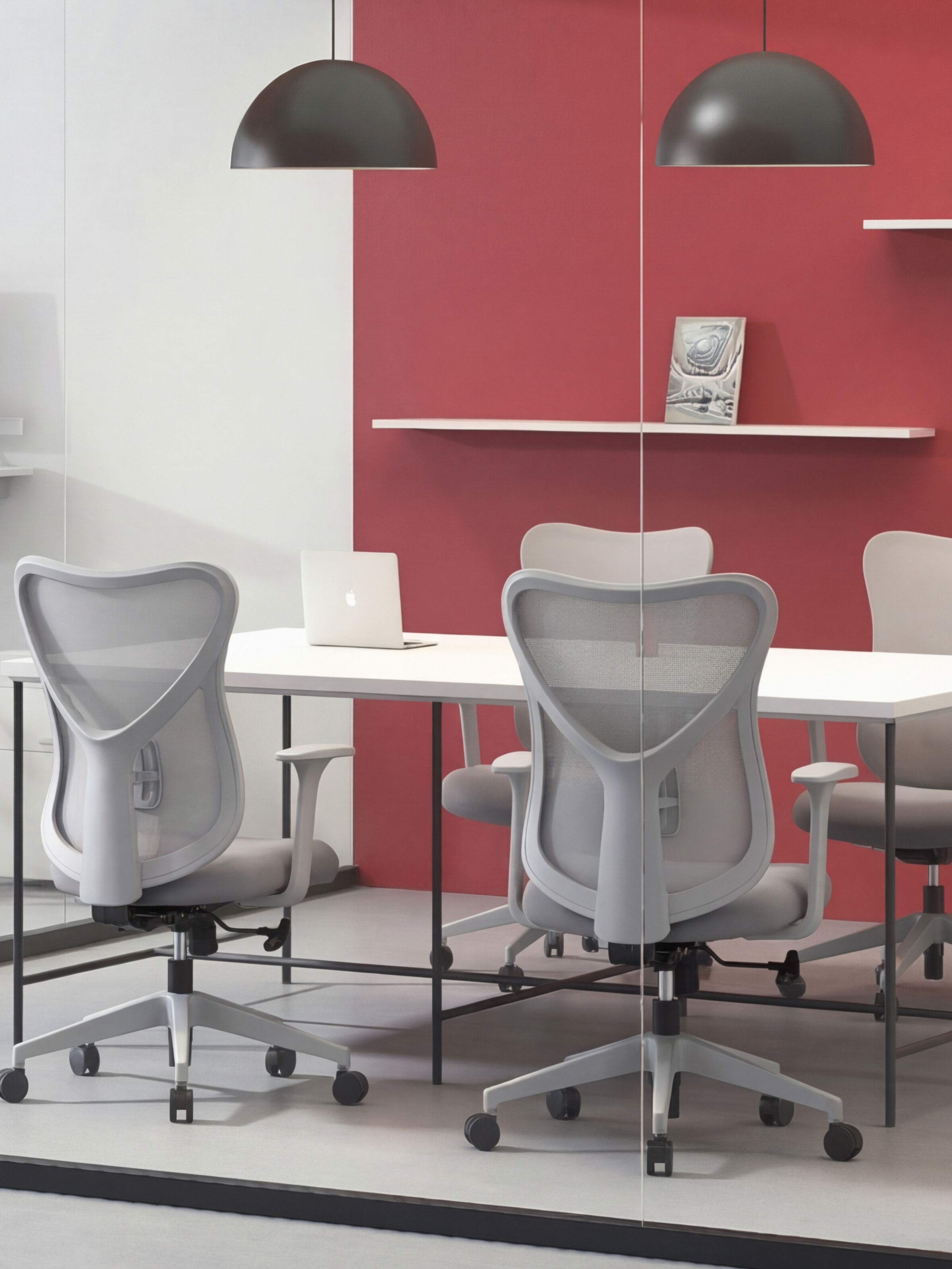
Seat Adjustments: The Foundation of Postural Alignment
Proper seat configuration establishes the baseline for spinal alignment in any quality ergonomic office chair. Without foundational adjustments, even advanced lumbar or recline systems fail to deliver their full benefits.
Pneumatic seat height adjustment for optimal thigh–desk alignment
Achieving correct thigh orientation prevents strain on hips and lower back. Per OSHA guidelines, knees should form a 90–110° angle with feet flat on the floor and thighs parallel to the ground. Pneumatic controls enable millimeter-precise elevation changes—critical for accommodating diverse user heights and maintaining proper clearance between thighs and desk surfaces. This adjustment directly supports healthy blood circulation and reduces pressure on the sciatic nerve by 37% compared to fixed-height chairs (Ergonomics Journal, 2023).
Seat depth adjustment to prevent popliteal pressure and support natural lumbar curvature
Insufficient seat depth compromises lumbar support; excessive depth causes popliteal compression behind the knees. The optimal setting leaves 2–3 finger-widths between the seat edge and knee crease—a positioning validated by vascular studies showing 29% improved lower-body circulation. This depth also positions users closer to the backrest, activating integrated lumbar mechanisms without manual intervention. Critically, it helps maintain the pelvis’ natural anterior tilt—the biomechanical prerequisite for sustained spinal alignment during extended sitting.
Lumbar Support Adjustability: Personalized Spinal Stability
The foundation of sustained comfort in any quality ergonomic office chair lies in its ability to maintain the spine’s natural S-curve. Static lumbar supports often fail to accommodate individual spinal variations, leading to slouching or premature fatigue. Adjustable height positioning allows users to align the support precisely with their lumbar vertebrae, ensuring continuous contact with the lower back’s inward curve.
Independent height and depth control for precise lower-back engagement
Independent depth adjustment further personalizes support intensity, letting users calibrate how firmly the pad contacts their spine—whether preferring subtle reinforcement or pronounced pressure. This dual-axis customization prevents pelvic tilt and distributes weight evenly, reducing lower back pain by up to 35% (BMC Musculoskeletal Disorders, 2023). By micro-tuning these dimensions, the chair adapts to unique body profiles rather than forcing the user into a generic posture.
4D Armrests: Enabling Neutral Shoulder and Wrist Posture
Height, width, depth, and pivot adjustments reduce upper trapezius activation
Four-dimensional (4D) armrests represent a critical advancement in ergonomic office chair design, allowing micro-adjustments across height, width, depth, and pivot axes. These precise calibrations enable users to maintain neutral shoulder positioning—where arms rest comfortably at ~90-degree angles with shoulders relaxed—directly reducing muscle strain. Research by NIOSH (2022) confirms that optimized 4D configurations lower upper trapezius activation by 30–40% compared to fixed armrests, preventing chronic tension and neck pain. Key benefits include:
- Wrist alignment: Pivoting armrests keep wrists straight during typing, decreasing carpal tunnel risk
- Postural support: Width and depth adjustments accommodate different body frames while keeping elbows close to the torso
- Dynamic adaptability: Real-time modifications during tasks like writing or mouse use prevent compensatory shrugging
By distributing arm weight evenly and eliminating pressure points, 4D armrests transform static sitting into biomechanically sustainable work postures—essential for preventing repetitive strain injuries in computer-intensive roles.
Recline System: Supporting Dynamic Sitting and Movement
Tilt tension control and lock for task-specific stability
Adjustable tilt tension allows users to customize resistance when reclining based on body weight and task demands—providing firm support for focused computer work while enabling easier recline for reading or phone calls. Lock positions offer fixed angles for stability during intensive tasks, preventing unintended backward movement that could strain neck muscles. Proper tension settings reduce spinal compression by up to 40% compared to static chairs (Ergonomics Journal, 2023).
Synchro-tilt mechanism preserves pelvic angle and spinal alignment during recline
Advanced synchro-tilt systems coordinate backrest and seat movement to maintain the spine’s natural S-curve when leaning back. As the backrest reclines, the seat pan automatically tilts forward—keeping the thigh-to-torso angle within the optimal 100–135° range. This synchronized motion prevents posterior pelvic rotation (tucking under), which increases disc pressure, while distributing weight more evenly across the seating surface. Research shows such mechanisms increase hourly micro-movements by 53% compared to fixed chairs, promoting circulation and reducing fatigue.
Integrated Backrest Control: Unified Adjustment for Whole-Back Support
Integrated backrest control systems unify thoracic, lumbar, and pelvic support adjustments through a single intuitive mechanism. Unlike segmented controls requiring separate tuning, this holistic approach synchronizes the entire backrest to maintain natural spinal curves—from sacral to cervical regions—during movement. Simultaneous height and depth modulation ensures consistent pressure distribution across the spine while reducing muscle fatigue during posture shifts. Studies indicate unified systems decrease repositioning frequency by 40% compared to fragmented controls, as users achieve optimal whole-back alignment with fewer interventions. Eliminating isolated adjustment points also prevents unintended misalignment between adjacent support zones—a common flaw in chairs with decoupled lumbar mechanisms. By harmonizing upper, mid, and lower back reinforcement, integrated controls actively preserve neutral posture during extended sitting—critical for preventing disc compression and chronic myofascial strain.
FAQ
Why is seat height adjustment important? Proper seat height adjustment is crucial to maintain a 90–110° angle between your thighs and the ground, which supports blood circulation and reduces strain on the hips and lower back.
How does seat depth adjustment benefit lumbar support? Seat depth adjustment prevents popliteal pressure and supports the lumbar spine by ensuring 2–3 finger-widths space between the seat edge and knee crease, improving lower-body circulation and maintaining the natural anterior tilt of the pelvis.
What are the benefits of 4D armrests? 4D armrests enable height, width, depth, and pivot adjustments to maintain neutral shoulder and wrist posture, reducing upper trapezius activation and preventing repetitive strain injuries.
How does a recline system support dynamic sitting? A recline system, with tilt tension control and synchro-tilt mechanisms, helps maintain the spine's natural S-curve and reduces spinal compression by aligning the thigh-to-torso angle and promoting micro-movements.
What is the advantage of integrated backrest control? Integrated backrest control synchronizes thoracic, lumbar, and pelvic support, maintaining natural spinal curves and reducing repositioning frequency and muscle fatigue during long sitting periods.
Table of Contents
- Seat Adjustments: The Foundation of Postural Alignment
- Lumbar Support Adjustability: Personalized Spinal Stability
- 4D Armrests: Enabling Neutral Shoulder and Wrist Posture
- Recline System: Supporting Dynamic Sitting and Movement
- Integrated Backrest Control: Unified Adjustment for Whole-Back Support
- FAQ