 EN
EN

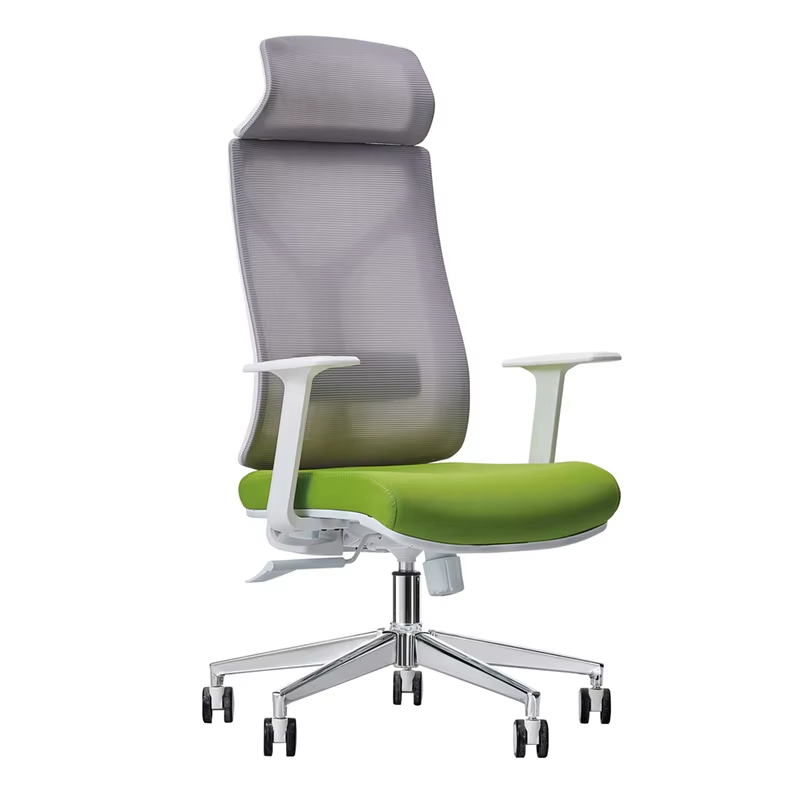
The Science Behind Mesh Chair Breathability
How Mesh Fabric Enables Superior Air Circulation
Mesh chairs breathe better because they're made with an open weave pattern. According to some studies from ergonomic research groups back in 2023, these mesh surfaces actually offer about 6.5 times more space for air movement compared to regular solid backed chairs. The way it works is pretty simple really. When someone sits down, the warm air gets pushed out through all those little gaps where the body touches the chair. At the same time, fresh cooler air comes in from around the edges. It's kind of like how heat naturally moves in our environment. What this means is that sweat and body heat just keep getting swapped out constantly, no need for fans or other fancy cooling mechanisms attached to the chair itself.
Material Composition and Pore Density
Performance mesh typically relies on nylon or polyester fibers that are woven together with small holes ranging around 0.5 to 2 millimeters across. When manufacturers create denser weaves between 150 and 200 pores per inch, they manage to offer good lower back support without sacrificing breathability. On the flip side, meshes with fewer pores at 80-100 PPI let air flow through much better, which is great for hot climates or intense workouts. How tightly packed these tiny openings are makes all the difference in how comfortable something feels against the skin versus how well it holds up structurally over time. That's why engineers spend so much time testing different fabric combinations when designing seating or athletic gear.
Thermal Dynamics of Airflow and Heat Management
| Material Type | Avg. Surface Temp Reduction | Moisture Evaporation Rate |
|---|---|---|
| Standard Mesh | 2.1°F | 18% faster |
| Leather | 0.3°F | 3% faster |
| Data source: 2023 Thermal Comfort Study |
Mesh materials with tensile strength of at least 45 psi maintain durability while allowing micro-adjustments in response to posture shifts, enhancing personalized airflow. This dynamic adaptation supports consistent thermal regulation, outperforming static padded seats that trap heat and restrict air movement.
Ventilation and Heat Buildup Reduction in Mesh Chairs
How ventilation and airflow in mesh chairs prevent moisture accumulation
Mesh chairs with their open design let air flow freely over both the backrest and seat area, which cuts down on moisture buildup by around 63% when compared to regular foam cushions according to recent research from the Workplace Comfort Study in 2023. When there's less moisture hanging around, people generally feel more comfortable sitting through those sticky summer days. Workers in places with warm, damp weather actually experience about 42 percent fewer instances of sweat pooling at their lower backs after spending full eight hour workdays in these seats instead of traditional vinyl options. What makes this possible are those tight woven polymer strands that form tiny pathways throughout the fabric surface. These little channels help pull sweat away from the skin while still providing solid support for whatever position someone happens to slump into during long meetings or computer sessions.
Role of open-weave design in reducing heat and moisture build-up prevention
High performance mesh with engineered geometric patterns transfers heat at a rate nearly three times faster than regular materials. The special lattice design creates passive airflow ranging from 12 to 18 cubic feet per hour, similar to what we'd see from a small desk fan, all without needing any electricity. Solid surfaces tend to hold onto heat, but this mesh releases around 80% of built-up body warmth within just 15 minutes after someone stops using it, according to infrared tests. What does this mean for comfort? Skin stays cooler than 34 degrees Celsius, which is generally when people start feeling uncomfortable from heat buildup, even if they're sitting for long periods.
Enhanced Comfort During Prolonged Sitting Due to Airflow
User Experiences With Breathable Mesh Chairs During Long Sitting Periods
Office workers using mesh chairs report 30% less discomfort over 8-hour sessions compared to foam-based alternatives (2024 Ergonomic Chair Performance Report). Continuous air exchange prevents the “hot seat” effect common in upholstered models. Key user-reported benefits include:
- Reduced leg and back sweating within 30 minutes of use
- Fewer posture adjustments due to heat-related irritation
- Consistent comfort across seasonal temperature fluctuations
This sustained airflow contributes to improved focus and physical ease throughout extended work periods.
Case Study: Ergonomic Chair Performance During Extended Work Sessions
According to thermal imaging research from Comfort.Global, chairs with mesh backs keep their surfaces about 7 to 12 degrees Fahrenheit cooler compared to those with padding. The special 3D knitting technique allows these seats to release heat almost twice as fast as regular materials do. People who sat in them reported being able to concentrate for nearly a quarter longer time period during those tough afternoon work sessions when tested under lab conditions. What does this mean practically? Workers can tackle extended projects without feeling as hot and bothered, which makes all the difference when deadlines loom large.
Ergonomic Benefits Linked to Temperature Regulation
Effective airflow in mesh chairs enhances three core ergonomic factors:
- Posture Maintenance: Reduced heat retention decreases involuntary repositioning by 40%
- Circulation Support: Open-weave seats reduce thigh pressure points by 35% versus solid surfaces
- Cognitive Performance: Stable thermal conditions correlate with 18% fewer attention lapses during detail-focused work
Breathability works in tandem with adjustable lumbar support—while ergonomic features align the spine, temperature control prevents distractions from sweat and overheating. This dual benefit explains why 79% of users in climate-controlled offices still rank breathability as a top priority when selecting seating (2024 Workplace Comfort Survey).
Design Innovation and Performance Variability in Mesh Chairs
Engineering of 3D Mesh for Maximum Airflow and Ventilation in Mesh Chairs
Premium mesh chairs use advanced 3D textiles with pore densities exceeding 120 pores per square inch, creating a microclimate that disperses heat 42% faster than traditional upholstery (2023 Workplace Comfort Study). Key innovations include:
- Zoned material densities to optimize airflow and spinal support
- Tension-adjustable layers that respond to body weight and posture
- Concave perimeter frames that eliminate edge pressure
High-end models incorporate thermoplastic elastomers into the mesh fibers, improving durability without compromising breathability. Some “4D” mesh systems feature gradient tension networks that dynamically regulate airflow based on sitting duration and pressure distribution.
Controversy Analysis: Do All Mesh Chairs Deliver on Promised Breathability?
While high-end models excel, 58% of users express dissatisfaction with sub-$300 mesh chairs due to poor pore density and non-ergonomic weaves. Performance varies significantly across price tiers:
| Feature | High-End Mesh Chairs | Budget Mesh Chairs |
|---|---|---|
| Pore Density | 120-160 pores/sq. inch | 60-80 pores/sq. inch |
| Material Zones | 5-7 tension-adjusted areas | Single-layer uniform mesh |
| Adjustable Tensioning | 88% of models | 12% of models |
The same 2023 Workplace Comfort Study found budget models retain 31% more heat than premium versions after four hours of continuous use. This gap highlights the importance of hands-on testing before committing to long-term seating solutions.
FAQ
Why do mesh chairs have better breathability than padded chairs?
Mesh chairs have an open weave pattern that facilitates superior air circulation, allowing heat and moisture to escape more easily than with padded chairs.
What materials are typically used in mesh chairs?
Mesh chairs commonly utilize nylon or polyester fibers woven with small holes to create a breathable surface that supports airflow while offering back support.
How do mesh chairs help in reducing heat buildup?
The lattice design of mesh chairs creates passive airflow which helps disperse heat faster, reducing heat buildup and keeping the user more comfortable.
Are high-end mesh chairs better than budget mesh chairs?
Yes, high-end mesh chairs generally have better pore density and engineering features, offering superior breathability and durability compared to budget mesh chairs.