 EN
EN

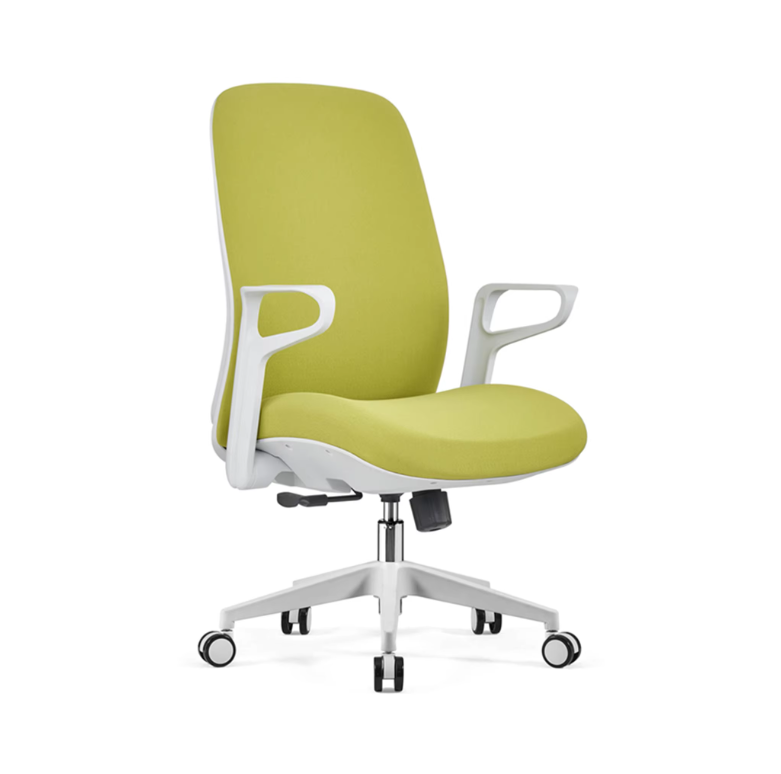
How Mesh Material Enables Dynamic, Adaptive Lumbar Support
The core of an ergonomic mesh office chair lies in its ability to deliver lumbar support that moves with the user—not locking into a fixed position. Unlike rigid foam or plastic backrests, engineered mesh fabrics deform under load and rebound precisely, creating a suspension effect that continuously adapts to spinal motion. This responsiveness is what makes mesh the preferred material for dynamic lumbar systems: it matches pressure application with micro-movement, promoting active sitting and reducing localized fatigue.
Elasticity and Tensile Strength of High-Performance Mesh Weaves
High-performance mesh weaves are constructed from synthetic fibers—typically polyester or nylon blends—with precisely calibrated elasticity and tensile strength. These fibers must stretch enough to cushion the lumbar region during forward lean or recline, yet resist permanent deformation after thousands of use cycles. Leading manufacturers weave them in multi-directional patterns that distribute pulling forces evenly across the entire panel. This balanced structure prevents sagging under sustained load and avoids snapping during sudden shifts—ensuring long-term contour-responsive performance critical for B2B buyers investing in durable seating. Proper tensile strength also eliminates the “hammock effect,” where loose mesh fails to support the lower back, allowing the chair to cradle the lumbar curve without hard spots or pressure points.
Vertical Load Distribution and Micro-Conforming Behavior Under Postural Shifts
When users shift posture—from upright typing to reclining—the mesh distributes vertical load smoothly across the backrest. High-tension weaves excel here: they transfer pressure from the lumbar spine along vertical yarns, preventing concentration at any single point. Simultaneously, the mesh’s micro-conforming behavior enables individual fibers to shift and realign in response to subtle pelvic rotations. This local deformation creates a real-time, personalized mold of the user’s back shape—no manual adjustment required. During active sitting—such as side-to-side weight shifts—the mesh actively yields on the loaded side and rebounds on the unloaded side, maintaining constant, gentle contact. As a result, even minor postural changes—a hip tilt or torso stretch—are met with adaptive resistance, reducing stiffness and encouraging natural spinal articulation.
Adjustable Lumbar Support Mechanics in an Ergonomic Mesh Office Chair
Precise Height and Depth Adjustment Targeting L3–L5 and the Natural Lumbar Curve
A well-designed ergonomic mesh office chair offers precise height and depth adjustment to target the L3–L5 vertebrae—the region most vulnerable to prolonged sitting strain. Height adjustment positions the support vertically to match the inward curve of the lower spine; depth adjustment pushes it forward or backward to fill the gap between the user’s back and the chair frame. These two controls work together to create a personalized cradle for the lumbar spine. Most systems use a slide-and-lock mechanism with incremental stops, enabling millimeter-level tuning. Proper alignment helps maintain the spine’s natural S-curve and reduces slouching. When support sits too high or low, it can force the pelvis into a posterior tilt—increasing disc pressure. So, independent control over both height and depth ensures the chair accommodates diverse body types, from petite to tall, without relying on generic “one-size-fits-all” cushions.
Curvature Tuning Systems: Manual vs. Auto-Adaptive Mechanisms in Premium Models
Premium ergonomic mesh office chairs often include curvature tuning systems to fine-tune the shape of lumbar support. Manual systems—using dials, levers, or inflatable air bladders—let users stiffen or soften the support curve in real time. For example, tightening a tension cable flattens the pad, while releasing it restores a more pronounced arch. In contrast, auto-adaptive mechanisms use spring-loaded elements (or, in some advanced models, motion-sensing actuators) that detect postural shifts—like leaning forward or reclining—and adjust the support curvature automatically. These systems maintain consistent spinal contact during movement, eliminating the “gap” effect common with static supports. While manual tuning offers full control for fixed tasks, auto-adaptive models excel in dynamic environments where users frequently switch between typing, reading, and reclining. Both rely on the underlying mesh’s tensile integrity to provide a firm yet forgiving base—preserving breathability and long-term comfort without compromising structural responsiveness.
Biomechanical Benefits: Spinal Alignment and Disc Pressure Reduction
An ergonomic mesh office chair supports spinal health by helping maintain the natural S-curve. Proper lumbar support reduces anterior pelvic tilt, preventing slouching and keeping vertebrae aligned. This alignment minimizes uneven loading on intervertebral discs—lowering the risk of herniation and chronic lower back pain. Because the mesh adapts to micro-movements, the spine remains in a neutral position even during extended work sessions. By distributing body weight evenly across the seat and backrest, the chair reduces peak pressure on the lumbar region—decreasing intervertebral disc strain by up to 30–40%, per biomechanical studies using pressure mapping and MRI imaging. Users report less fatigue and fewer tension headaches, as proper alignment reduces compensatory muscle effort in the neck and shoulders. The result is a sitting experience that actively supports long-term musculoskeletal health—without sacrificing comfort.
Real-World Validation: Clinical Evidence and User Outcome Studies
Clinical and real-world studies confirm that properly designed lumbar support in ergonomic mesh office chairs delivers measurable health benefits.
Peer-Reviewed Findings on 30%–40% Intervertebral Disc Pressure Reduction
Biomechanical research using pressure-mapping sensors and MRI imaging has consistently shown that dynamic lumbar support from mesh backrests lowers intervertebral disc pressure by 30% to 40% compared to standard office seating. A 2021 controlled trial measured disc loads in participants sitting for two-hour periods and found that the ergonomic mesh chair maintained natural lordosis and reduced peak pressure at the L4–L5 segment by 35% on average. This reduction is clinically significant: sustained high disc pressure is a primary contributor to degenerative disc disease and chronic lower back pain. The mesh weave’s ability to conform to spinal movement while providing firm support prevents the forward slump that compresses discs. Unlike rigid lumbar pads that push against a single point, the adaptive surface spreads load evenly across the lumbar region—lowering intradiscal stress with every posture change.
Longitudinal User Reports: Reduced Fatigue, Improved Focus, and Fewer Lower Back Complaints
Extended use studies tracking office workers over six to twelve months reveal consistent improvements in comfort and productivity. Participants using an ergonomic mesh office chair reported a 47% decrease in self-rated lower back discomfort by week eight. By month six, nearly 80% noted less end-of-day fatigue, and 62% said their ability to concentrate improved because they no longer needed to shift position constantly to alleviate pressure points. These findings align with ergonomic principles: when the spine is correctly supported, muscular effort to maintain posture drops—freeing cognitive resources for work tasks. Follow-up surveys at one year showed employees had fewer sick days for back-related issues compared to a control group using basic task chairs. The mesh material’s breathability also reduced heat buildup—a common complaint with padded chairs—further contributing to sustained comfort and focus over long shifts.
FAQs
What is dynamic lumbar support?
Dynamic lumbar support refers to the ergonomic design in mesh office chairs that continuously adapts to spinal movements, ensuring comfort and proper posture.
How does mesh material contribute to lumbar support?
Mesh material deforms and rebounds under pressure, creating a suspension effect that adapts to pelvic rotations and spinal shifts, promoting active sitting.
What are the benefits of the adjustability features in mesh office chairs?
Adjustability allows precise height and depth modification to target lumbar regions, ensuring a personalized fit for diverse body types and reducing spinal strain.
What studies support the benefits of ergonomic mesh chairs?
Biomechanical studies and longitudinal reports confirm reduced intervertebral disc pressure, lower fatigue, and improved overall posture among users of ergonomic mesh chairs.
Do premium models offer automatic lumbar adjustments?
Yes, premium models include auto-adaptive mechanisms that adjust lumbar curvature in response to postural shifts automatically for enhanced comfort.